- USA 250 Wrap-up 25-28 September
Our USA250 whirlwind trip is in the books! It was an amazing trip but after almost three weeks, it’s good to be home.
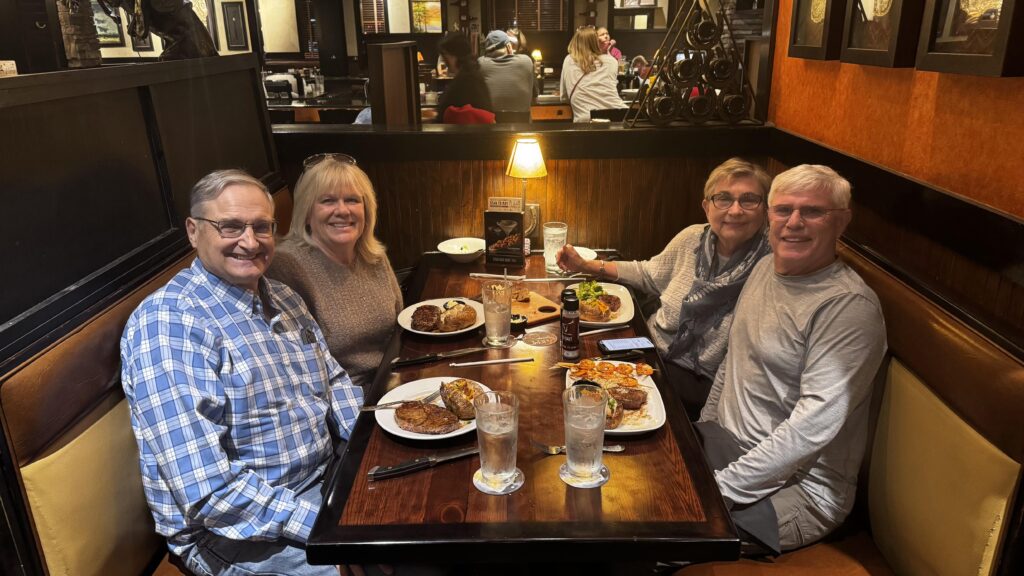
We finished things up in Dayton, Ohio by touring the magnificent National Museum of the United States Air Force. Making that even more special, our good friends Rob and Patti Westberg met us there. The museum consists of four huge buildings, so if you go, bring your walking shoes. The museum takes visitors from the early days of aviation at the turn of the 20th century through today’s ultra-modern flying machines. Given my pedigree, the Naval Aviation Museum in Pensacola, Florida will always be my favorite. But this was a very close second!
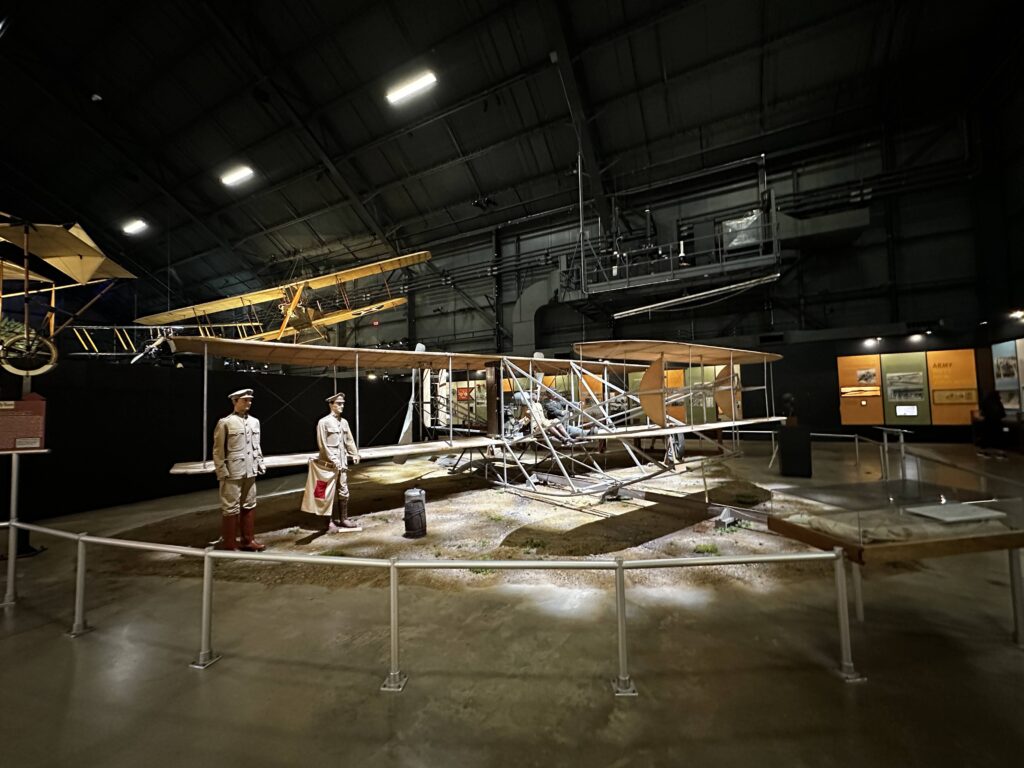
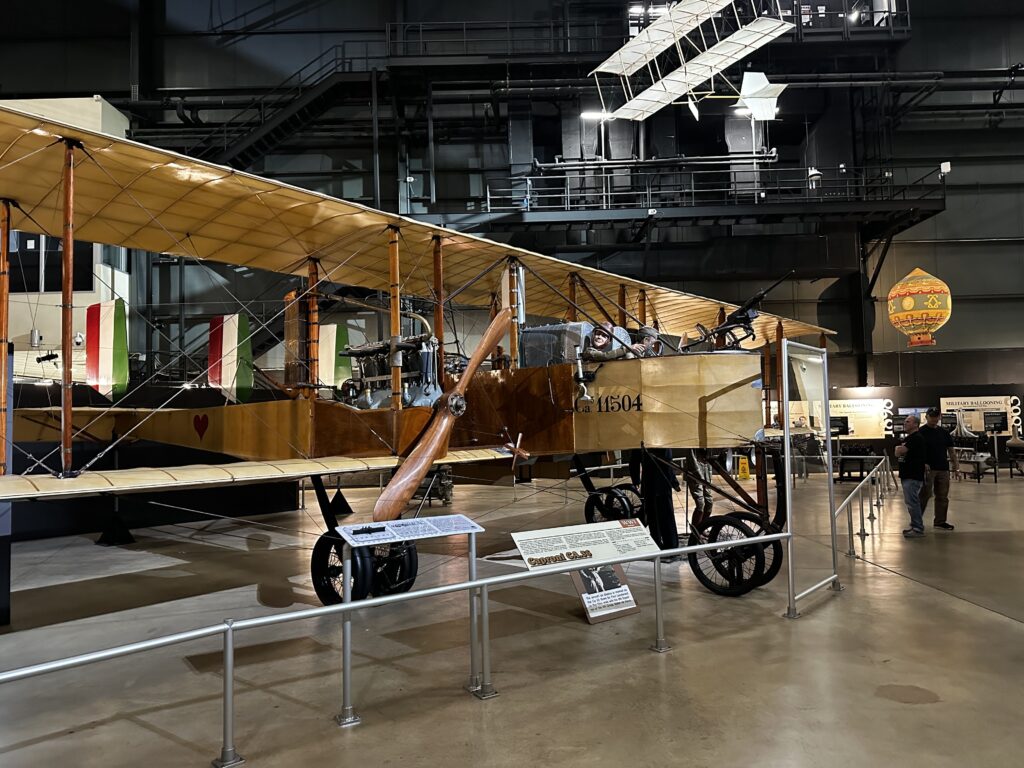
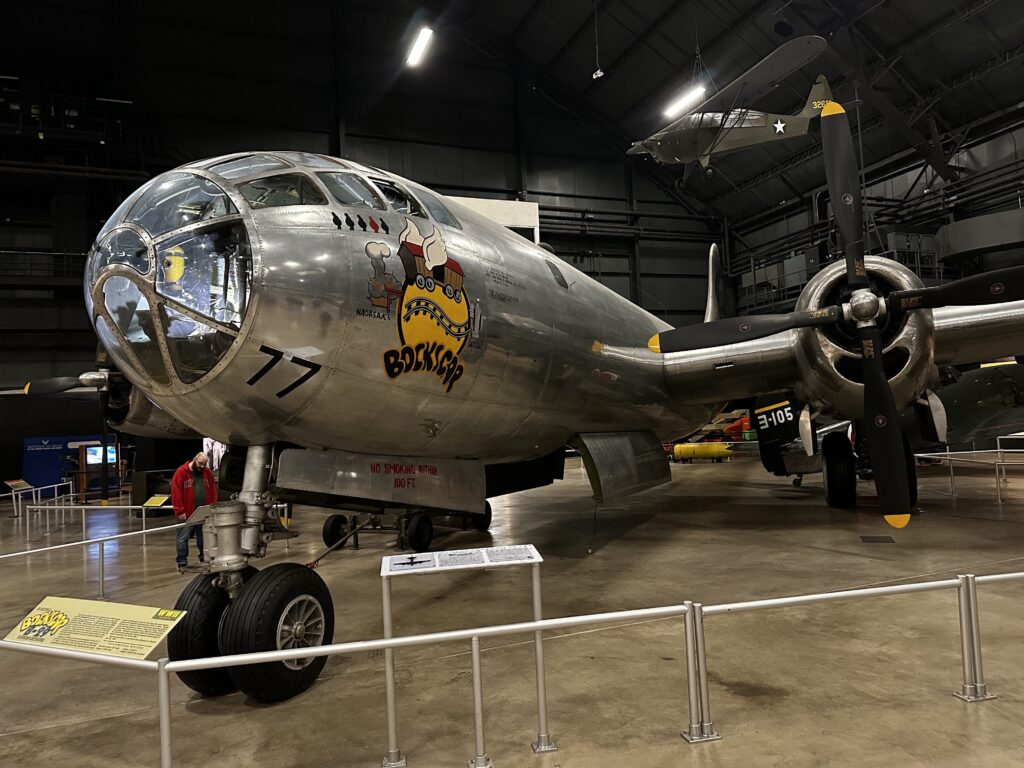
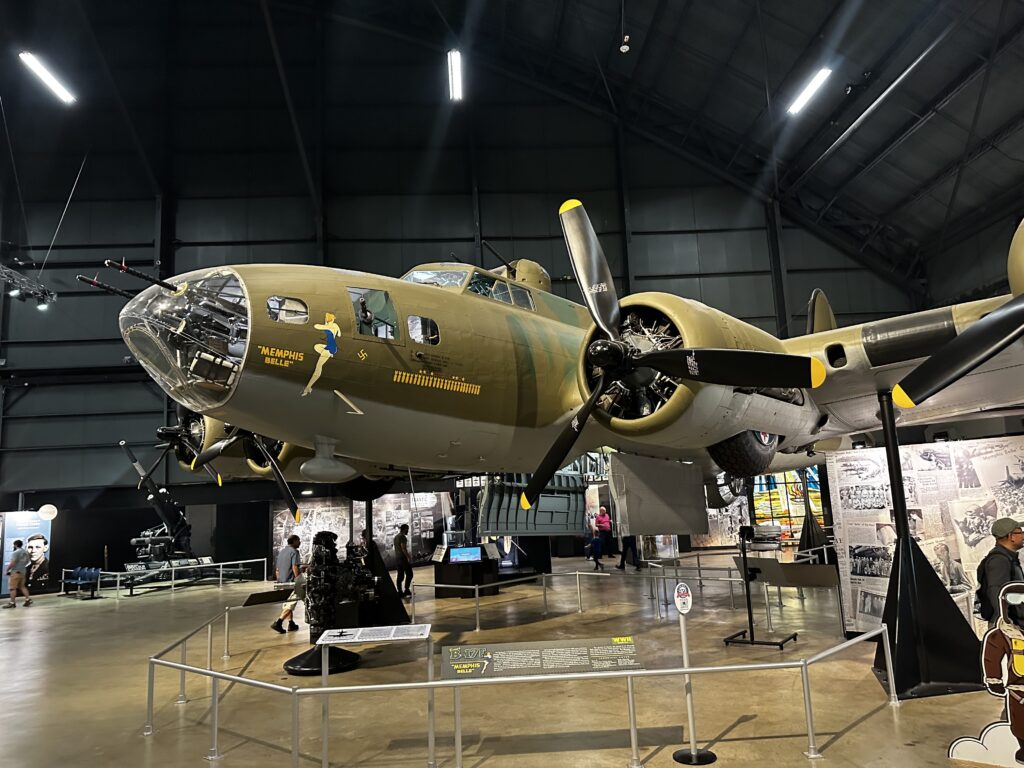
Bockscar B-29 (Nagasaki bomber) and Memphis Belle B-17
Putting things all together, we drove more than 3,000 miles on the roads of Montana, Idaho, North Dakota, Minnesota, Wisconsin, Michigan and Ohio. We visited two major national parks, a national seashore, a couple of state parks, four of the five great lakes, a bunch of small towns and cities, and several big and small museums, historical sites and places of interest. Thinking about it in those terms, we took a really big bite out of our north country. Where will we be heading next? Stay tuned.
- USA 250 ND – MN – WI – MI 20 – 25 September
After many miles under the tires, we are now in Charlevoix (pronounced sharlavoy) on Michigan’s lower peninsula. But let’s digress.
As we headed east from TR’s badlands, the seemingly endless great plains opened before us. Somewhere between Fargo ND (where we stopped to see a small museum dedicated to the great Yankee slugger Roger Maris), and Duluth MN, the great plains gave way to rolling terrain and green forests.
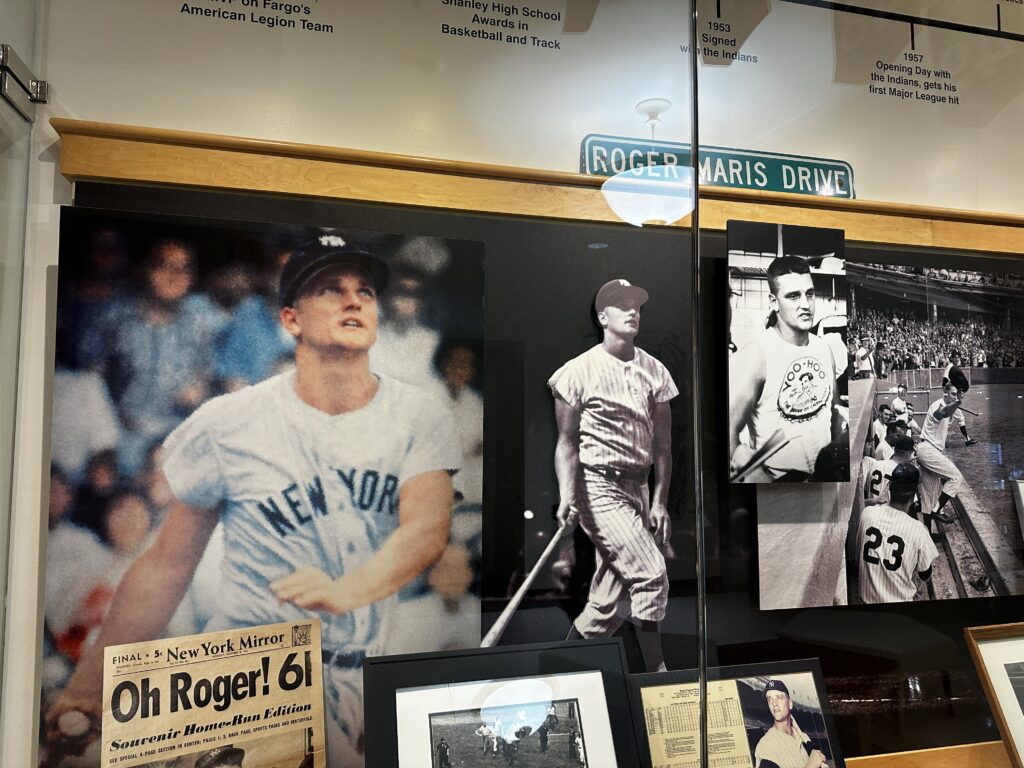
We then followed the south shore of Lake Superior to Marquette MI. Michigan’s Upper Peninsula is lightly populated and filled with dense forests, gorgeous lake vistas, and endless hiking opportunities. Called Gitche Gumee in the Ojibwe nation’s language, Lake Superior is the world’s largest lake in area and contains 10% of the planet’s fresh water.
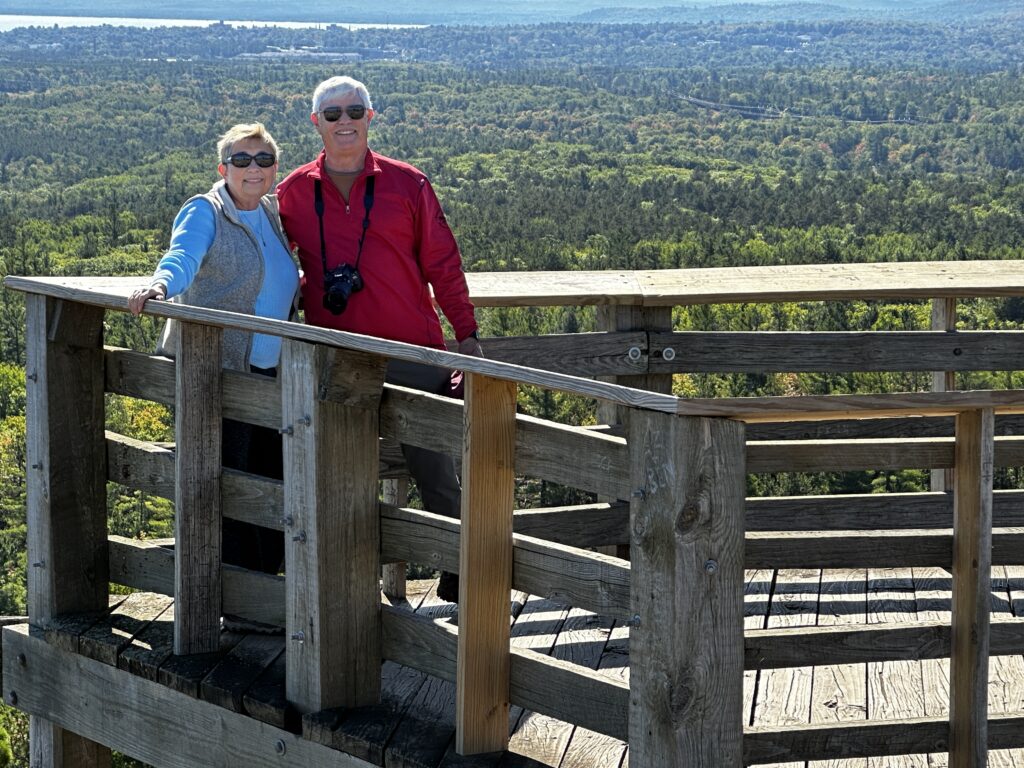
With a turn to the south, we set course for the Lower Peninsula. On one stretch of lightly traveled road a large black bear crossed our path, happily with no danger to him or us. We then crossed the gateway to the Lower Peninsula – the majestic Mackinac (pronounced Mackinaw) Bridge, which marked the convergence of Lake Michigan on our right and Lake Huron on our left. Several cute towns greeted us as we followed the eastern shore of Lake Michigan, including Mackinaw City, Petoskey and Traverse City.
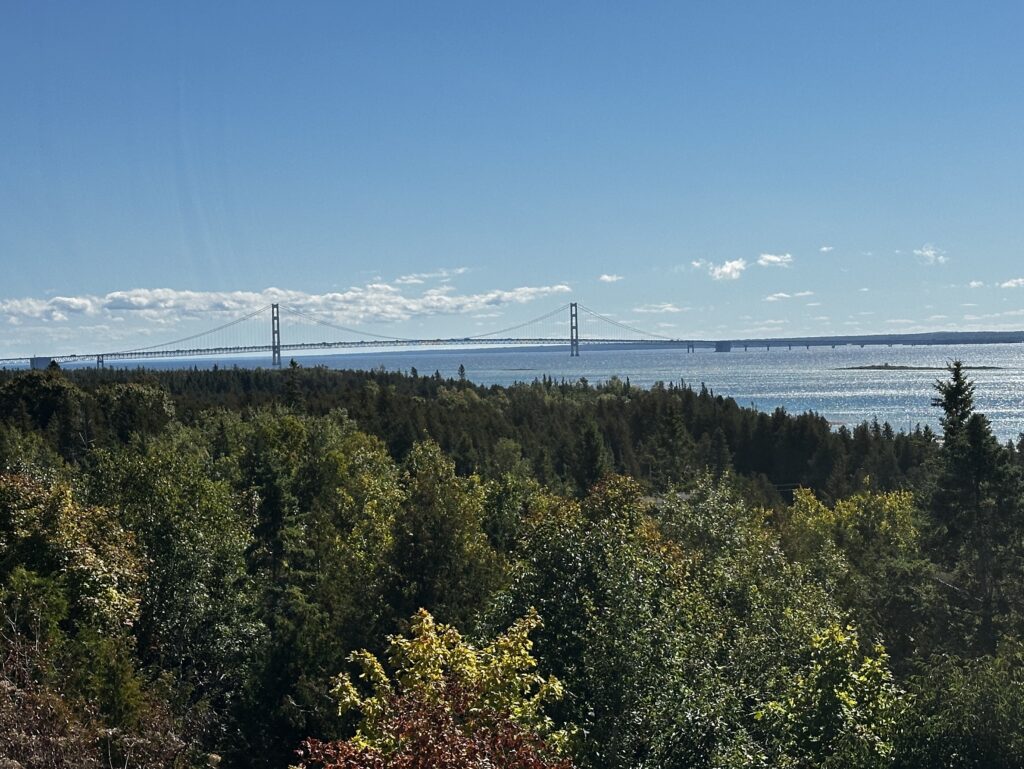
Mackinac Bridge
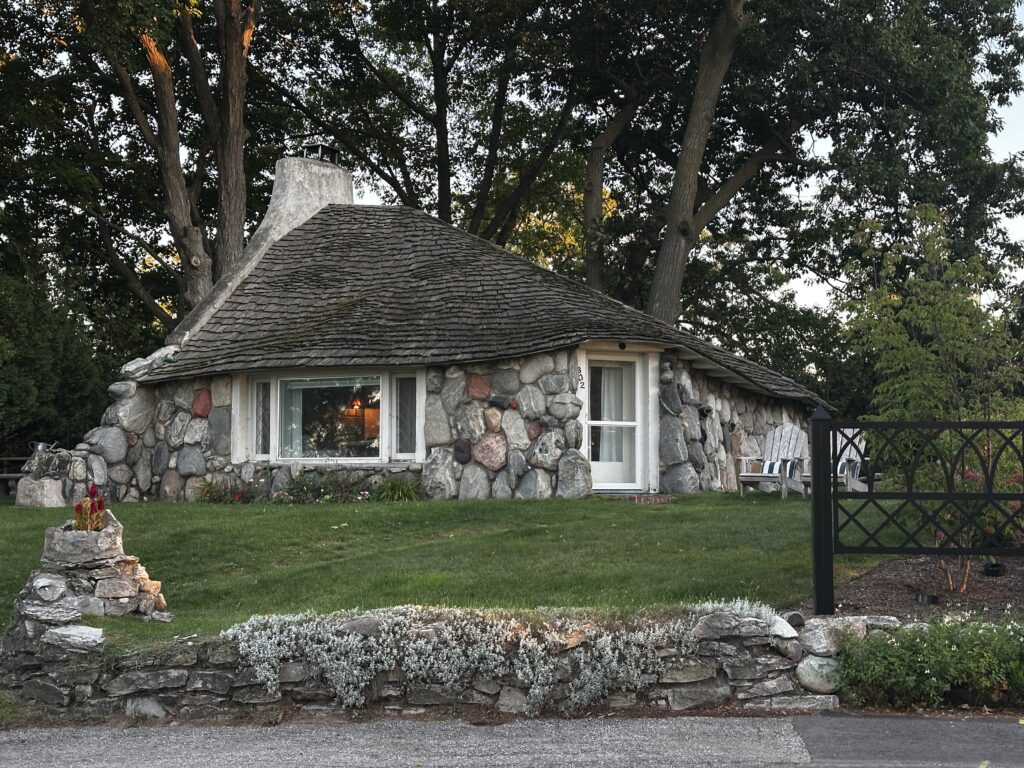
One of Charlevoix’s mushroom houses
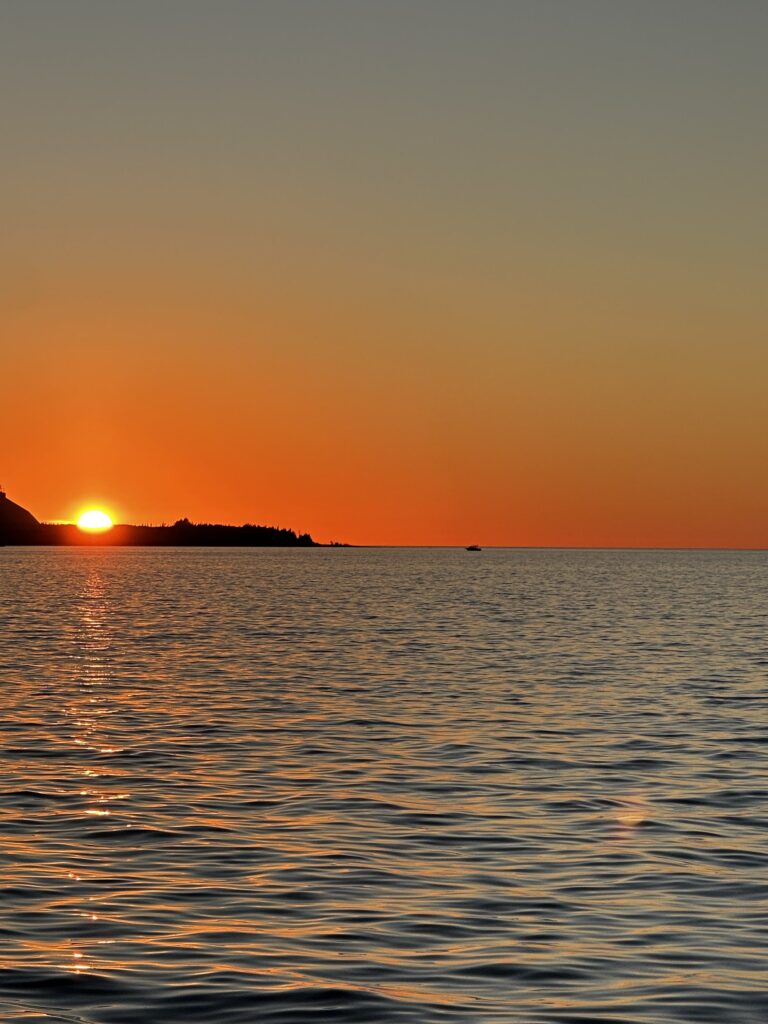
Sunset on Lake Michigan
- USA 250 Stop 3 – Theodore Roosevelt National Park & Presidential Library 16-18 September
Eons of river flows, rain, snow, and wind, carved the Badlands of North Dakota. In turn, this unforgiving wilderness with its stark landscapes shaped, transformed, and hardened the man we know today as Theodore Roosevelt.
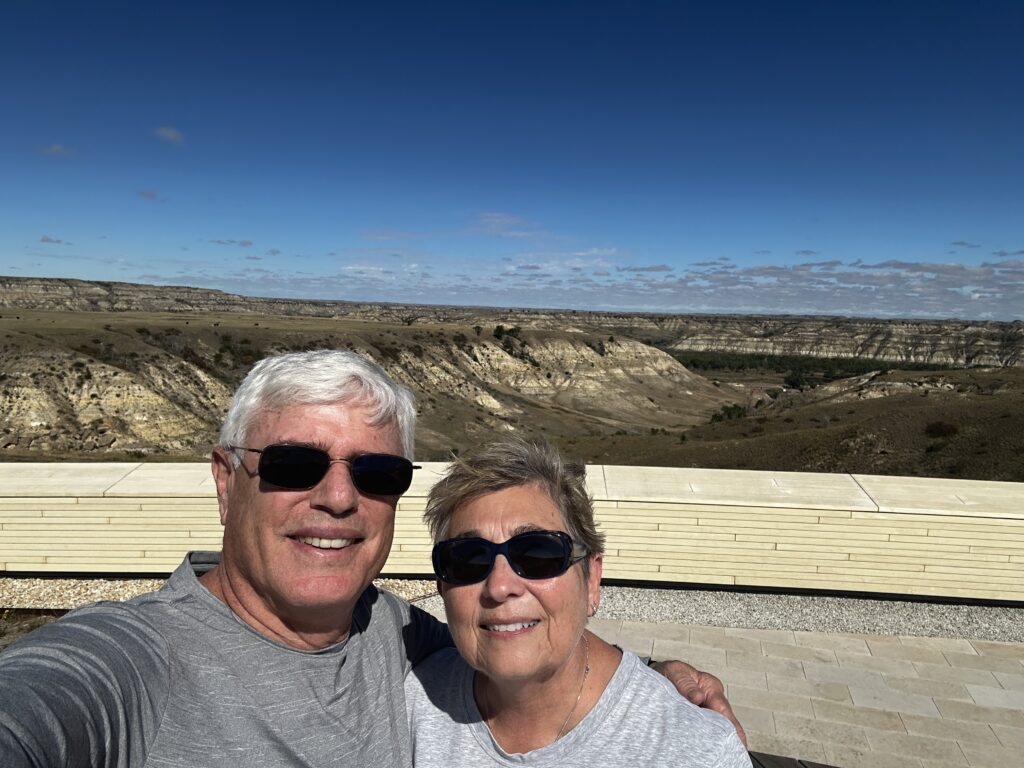
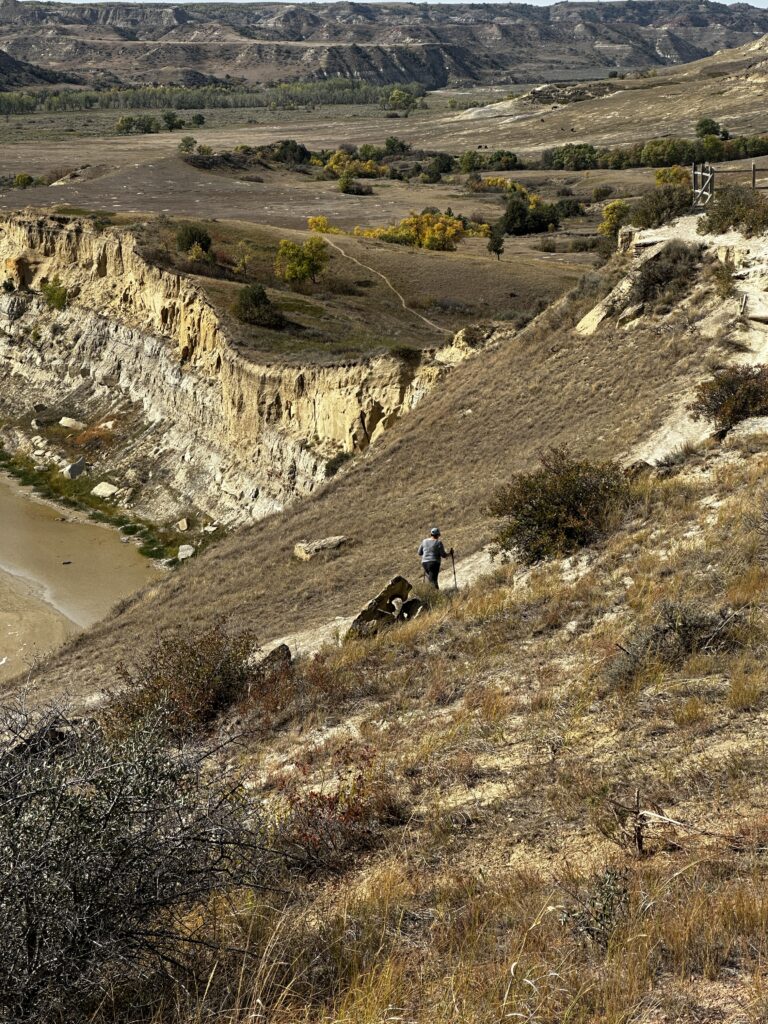
Broken and grief stricken after his wife and mother both died in his New York City brownstone on the same night in 1884, TR left the city and immersed himself in the hard life of a rancher in North Dakota. When he emerged several years later, he was renewed and ready to return to the political arena and national leadership.
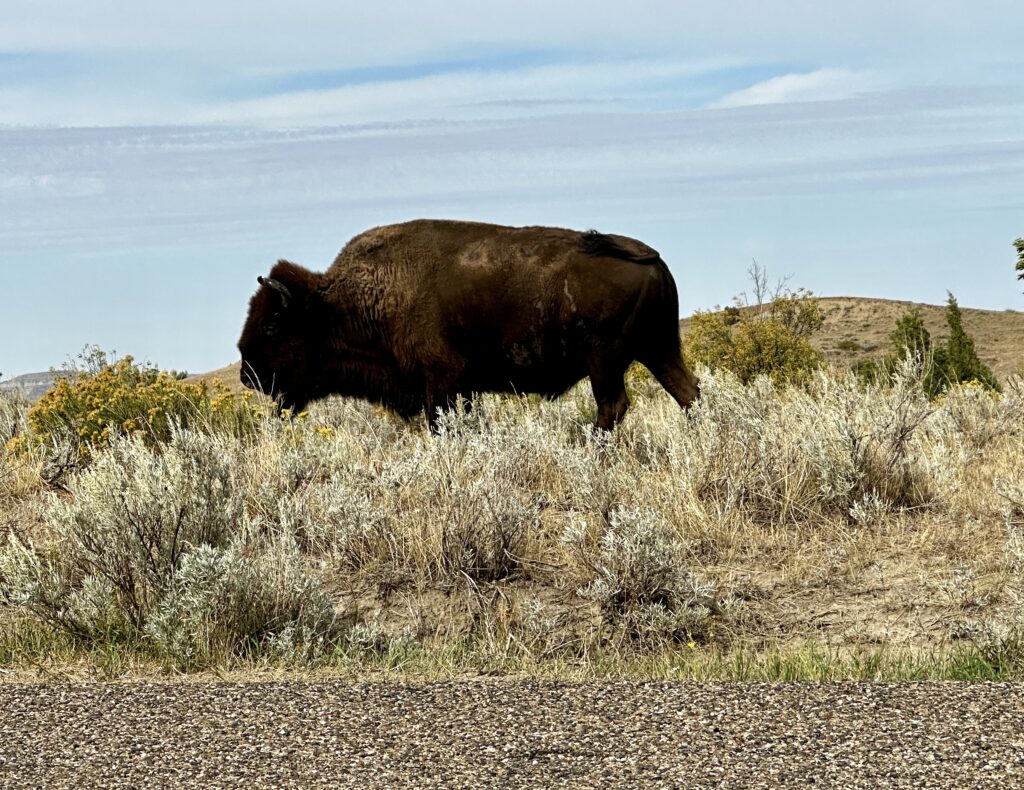
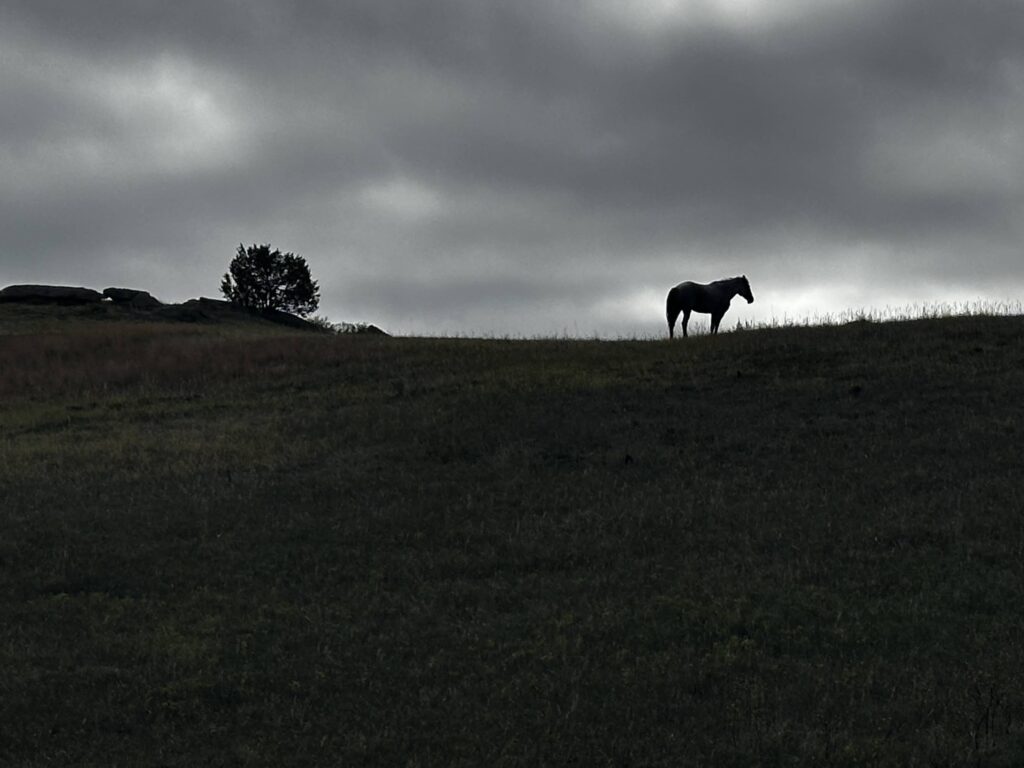
Visiting his presidential library and the national park named for him provided us with a unique opportunity to get to know our 26th president in ways not possible anywhere else. The beauty of the park was worth the visit on its own. We gazed at bison, wild horses, and prairie dogs aplenty as we drove and hiked around the park.
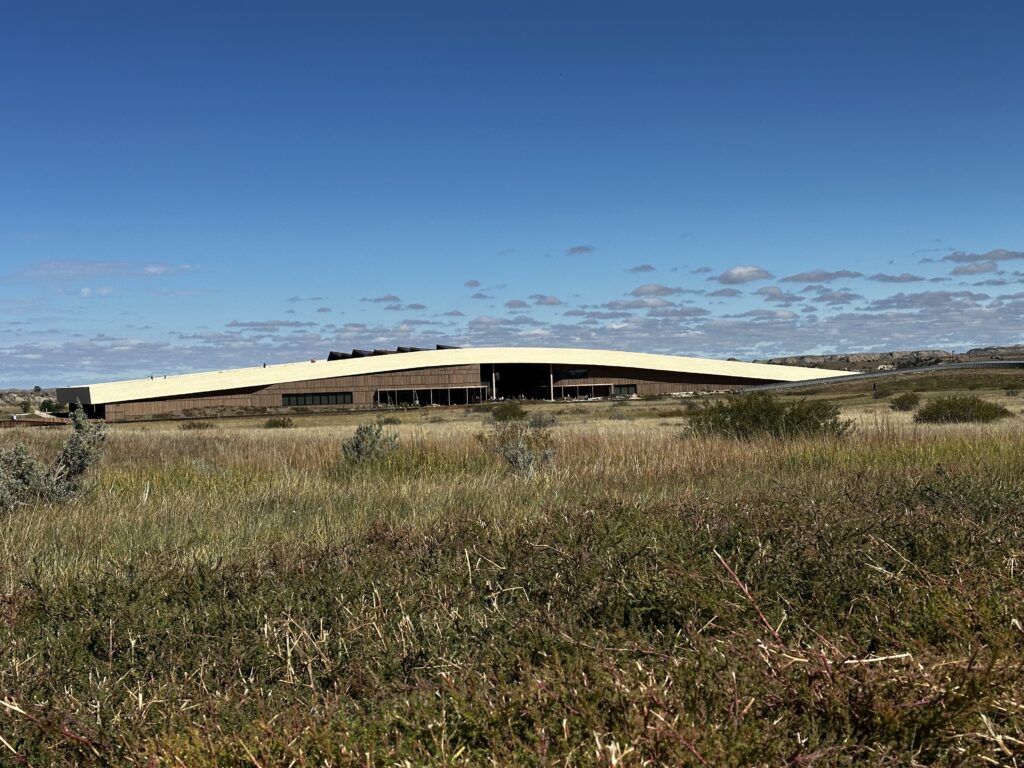
TR Library
- USA 250 Stop 2 – The Lolo Pass
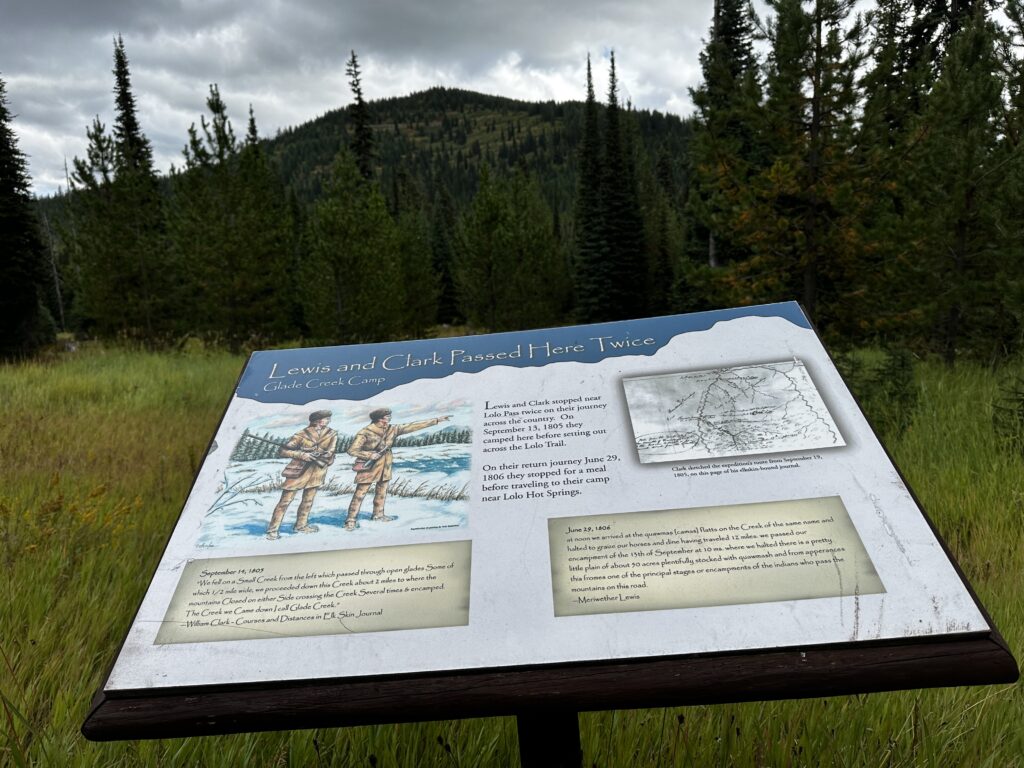
Those who believe there remains no howling wilderness in the United States owe themselves a trip to Idaho. Driving west from Missoula MT, we entered the Lolo pass on Rte. 12. On the Montana/Idaho border we visited a site where the Lewis and Clark expedition was known to have camped on September 14th, 1805, nearly 221 years to the day before we left our footprints there. Called the Glade Creek Camp, I suspect it looked then much as it does today.
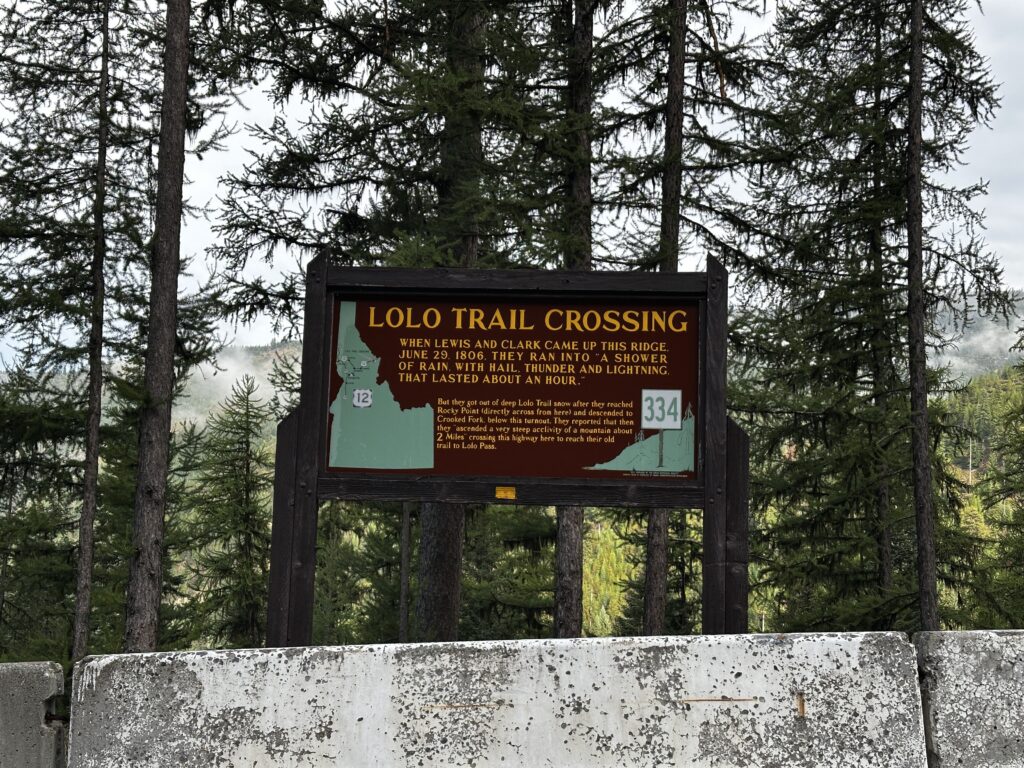
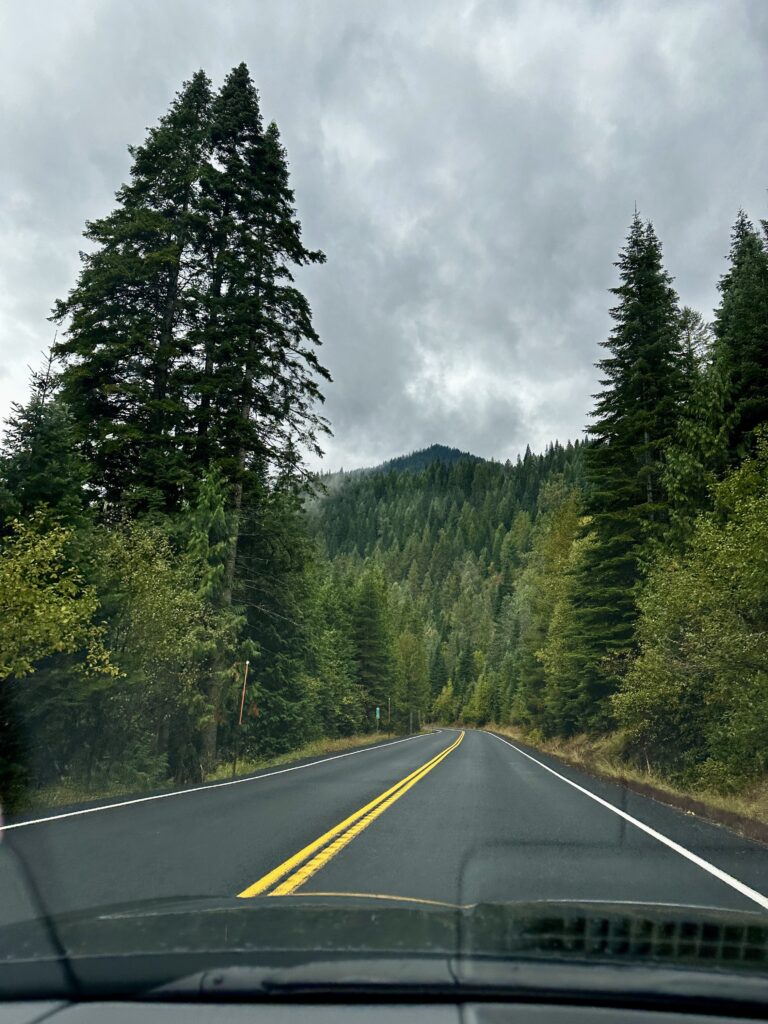
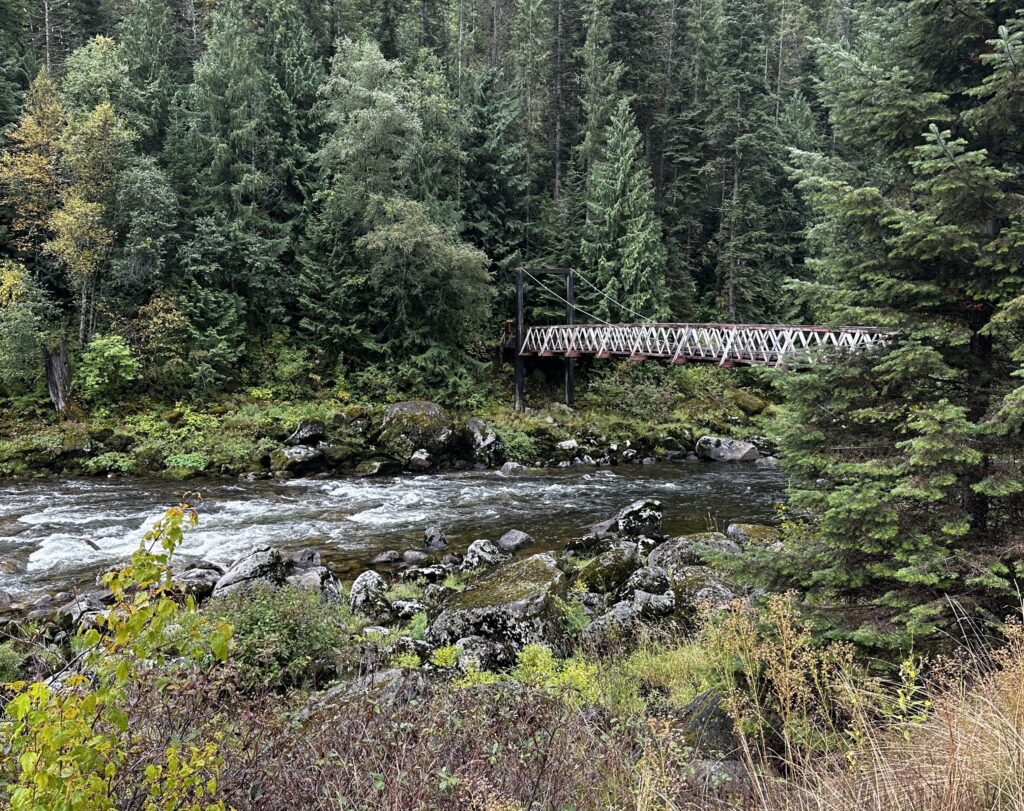
Continuing west, we followed along the Lochsa River, flanked by rising mountains dense with tall evergreens, and shrouded by low clouds. Occasionally a burned-out section of forest reminded me that Mother Nature is always at work erasing and rebuilding her eternal project.
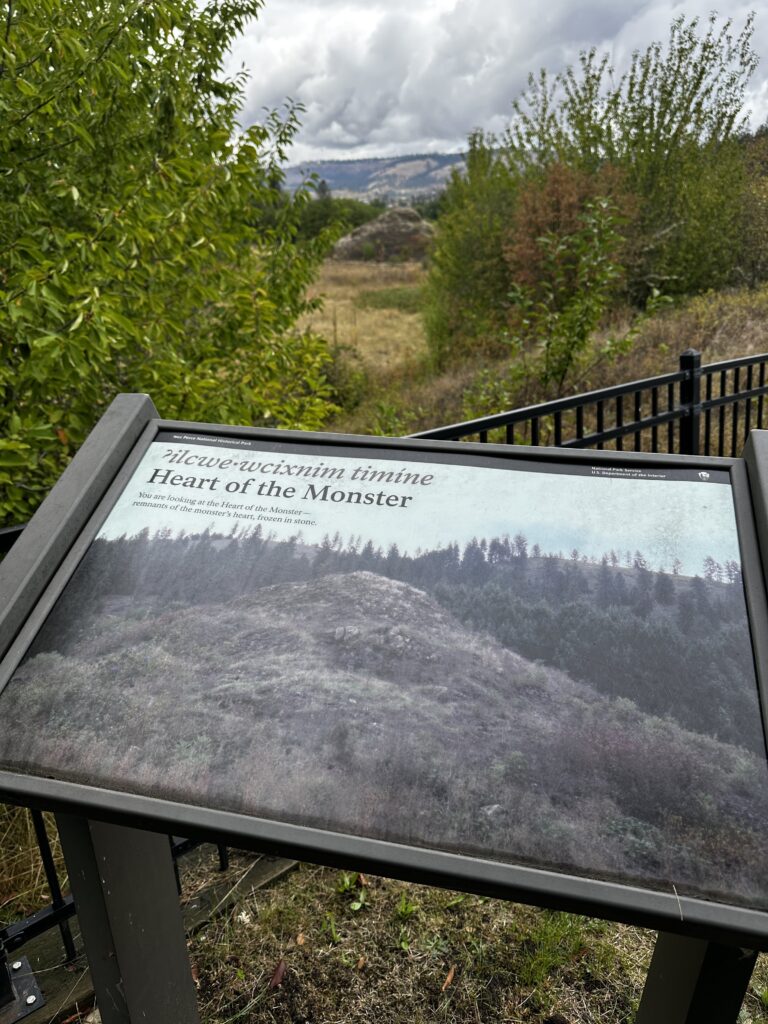
At one point in the journey, we left the United States and entered the Nez Perce Reservation, where we stopped at an important spiritual site for their nation. Their origin story surrounds a large rock outcrop, called the “Heart of the Monster.” As the legend goes, before humans were created an evil monster devoured all the animals of the forest. A trickster deity called Coyote allowed himself to be swallowed by the monster, and destroyed it from the inside, setting free all the animals. Wherever parts of the monster fell, there a nation of people sprang up. But the Nez Perce rose from the land surrounding the heart. And there it still rests to this day.
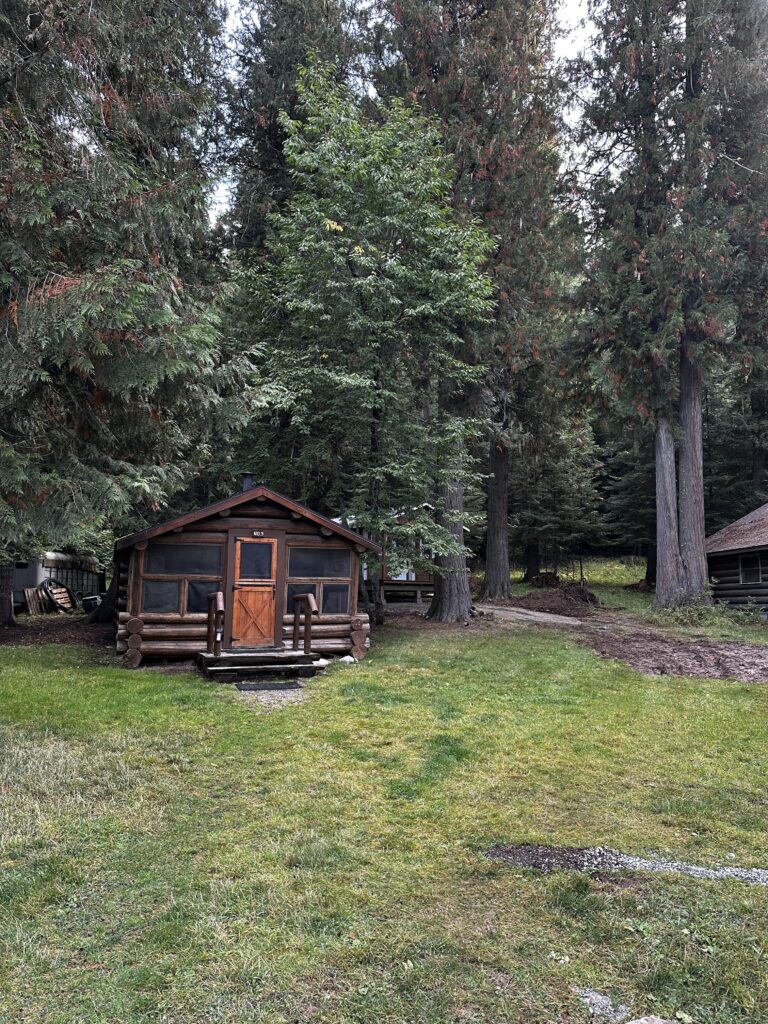
Finally, the rustic cabin in which we stayed, devoid of running water or interior plumbing, would not be totally unfamiliar to Lewis and Clark.
- USA 250 Road Trip Stop #1 – Glacier National Park Sep 12, 2026
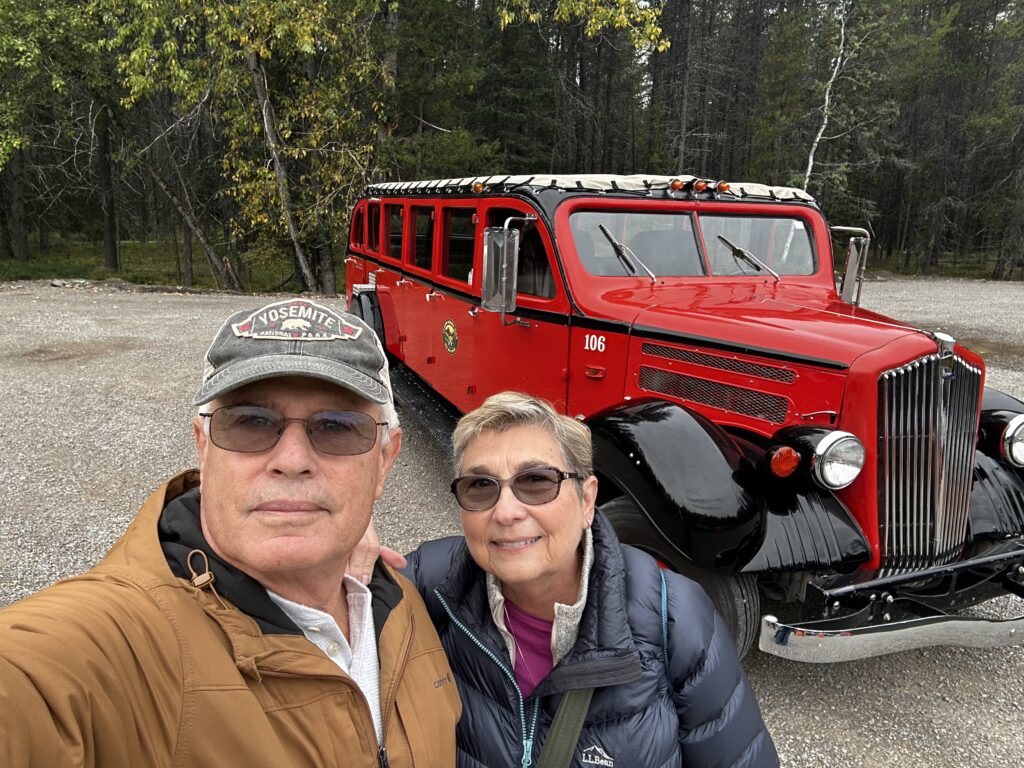
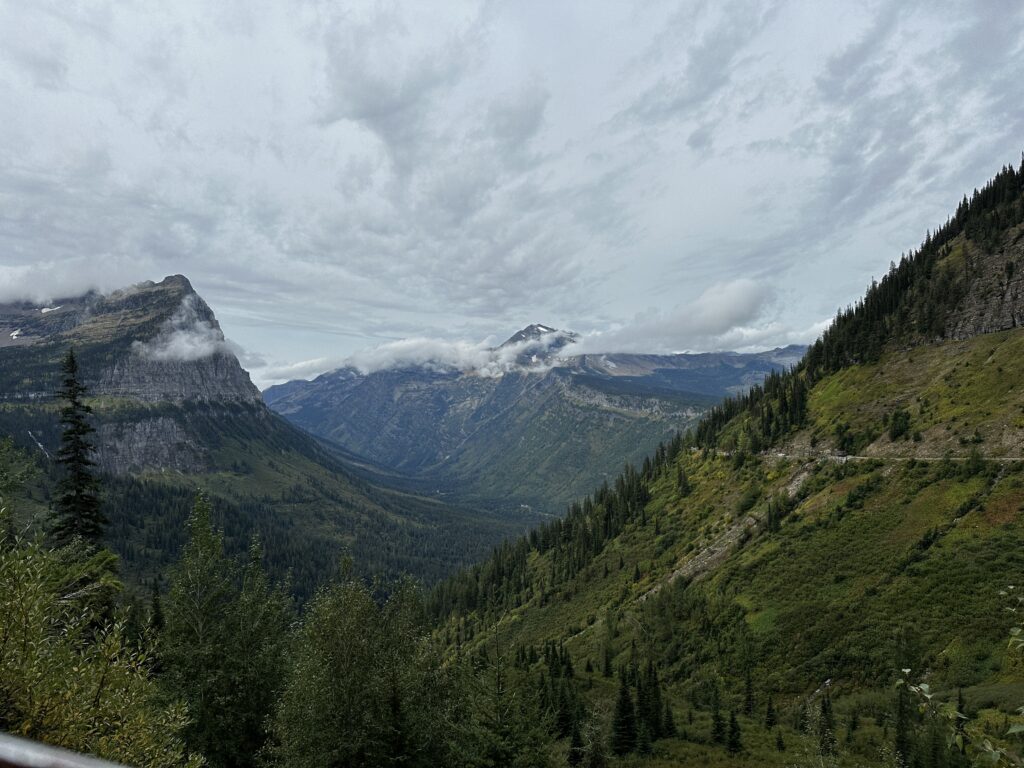
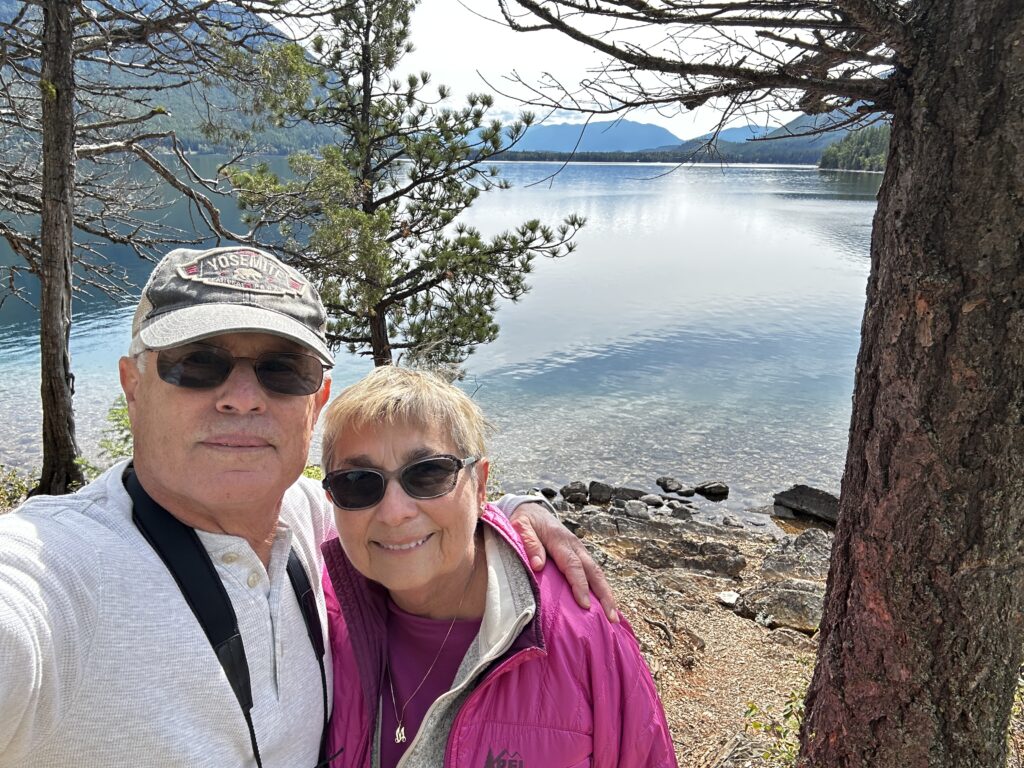
With a stop at Glacier National Park in Montana, our USA 250 road trip has officially begun. The day started with a beautiful trip to Logan Pass on one of the park’s famous red buses. Ours was manufactured 88 years ago in 1938. Every bend in the road greeted us with a spectacular vista. The pass marks the continental divide from which the park’s waters flow west to the Pacific, northeast to the Arctic, or into the Missouri River for its long journey to the Gulf. We capped the day off with hikes along the shore of Lake McDonald and into the park’s interior.