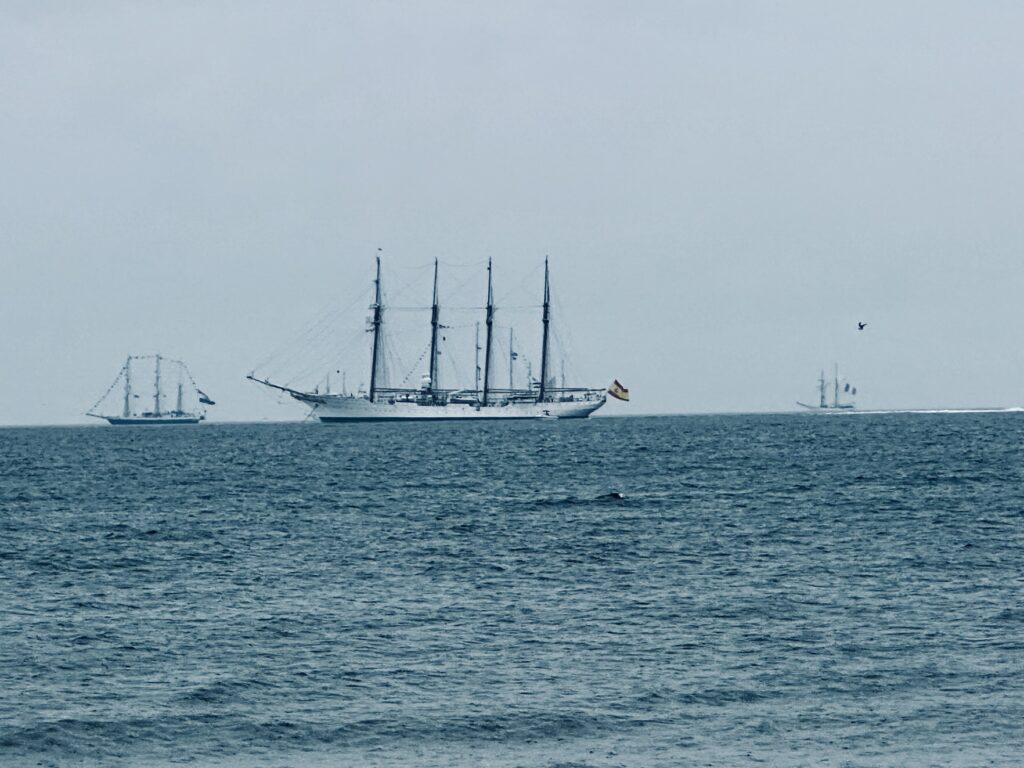
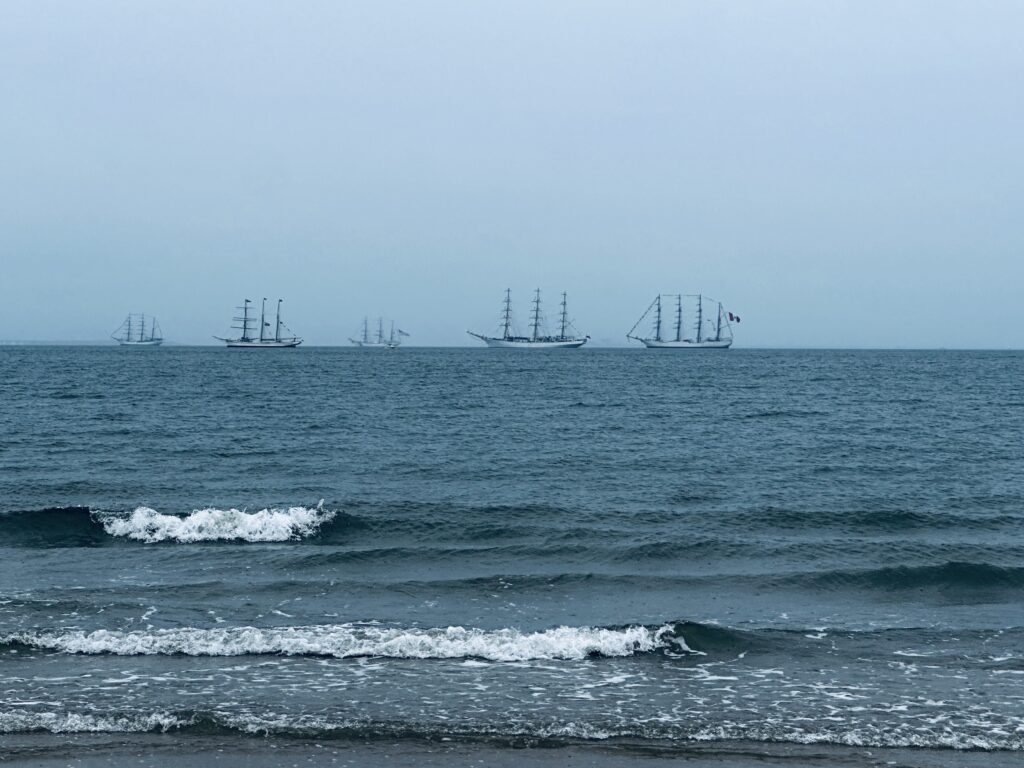
The weather on the morning of June 19th was overcast and rainy, hardly the conditions that the organizers of SAIL 250 were hoping for when the impressive assemblage of international tall ships was scheduled to weigh anchor at Lynnhaven Inlet at the mouth of Chesapeake Bay and proceed to Norfolk’s waterfront. The presence of the ships was meant to enhance the other festivities of the day associated with Harborfest and Juneteenth.
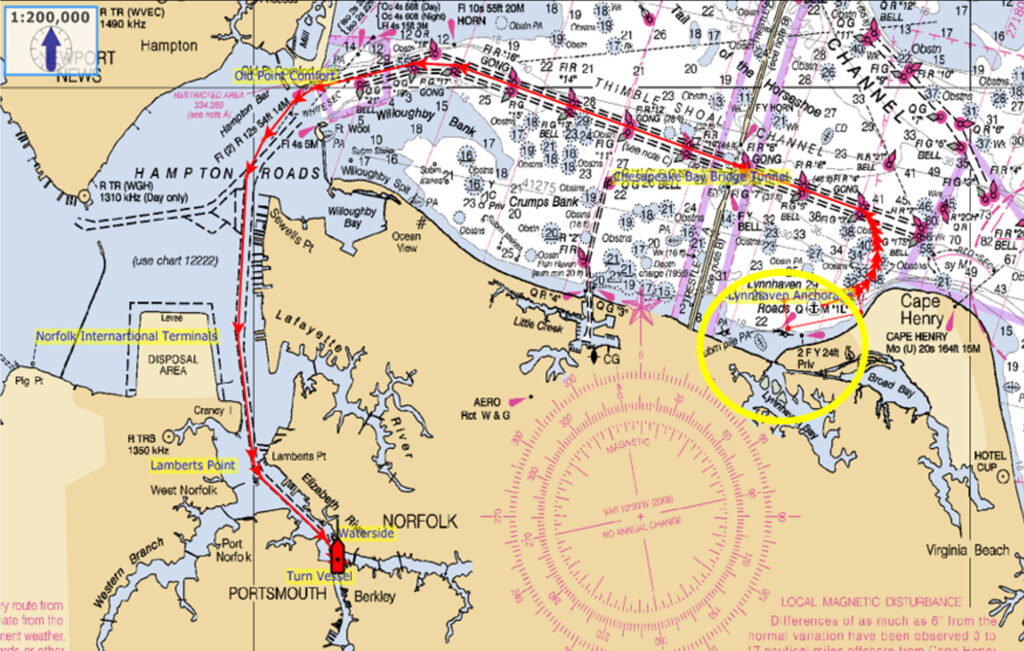
No matter. The anchors were hauled up right on schedule and each magnificent ship fell in line, led by the U.S. Coast Guard Cutter Eagle, for the 26 mile journey that would take them through the Thimble Shoals channel of the Chesapeake Bay Bridge Tunnel, then west through the Willoughby Channel under the ceremonial guns of Fort Monroe, then south to parade past the mighty ships of the United States Navy’s Atlantic fleet, and arrive at noon at the Norfolk waterfront at the entrance to the Elizabeth River. As a bonus, the morning rain gave way to a pleasant summer afternoon.
As I stood on the shore that morning to watch the multi-masted sailing ships of a bygone era get underway, I couldn’t help but imagine what I would have seen from that same spot on the morning of September 5th, 1781. On that morning, 245 years ago, the ships of the French navy, under the command of Admiral Comte de Grasse, would have been arrayed across the entrance to the Chesapeake Bay, blocking the British navy from entering the bay to relieve General Cornwallis who was trapped by George Washington’s army in Yorktown.
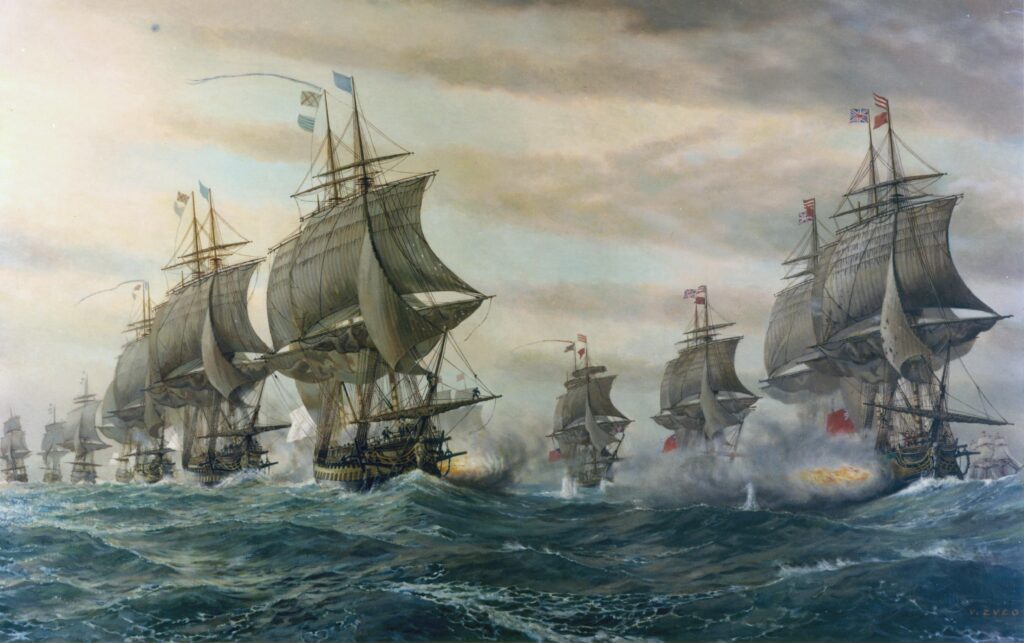
When De Grasse got word that the British fleet had arrived, he sortied his ships to meet them in the Atlantic Ocean just outside the bay. From my vantage I might have been able to see and hear the late afternoon engagement in the distance. After a brief but sharp fight, the British withdrew, leaving Cornwallis to his fate. On October 17th, 1781, he would surrender to Washington, effectively ending the Revolutionary War.